

SPE and IADC are pleased to announce the IADC/SPE Managed Pressure Drilling & Underbalanced Operations Conference & Exhibition. Technologies designed to control annular pressure during drilling, inclusive of Underbalanced Drilling, Managed Pressure Drilling and Dual Gradient Drilling are being used in many forms around the world. UBD continues to maximize reservoir performance, while MPD techniques spanning onshore performance drilling and offshore deep and shallow water prospects serve to enhance drilling safety and minimize NPT. Once considered a futuristic technology, DGD is now a reality with numerous wells drilled, and many exciting prospects on the horizon. New applications of these drilling practices take place every year, and their frequency continues to grow. This conference is a world recognized forum to help the energy industry better understand the technology and the effective, safe utilization of the various applications of UBD, MPD and DGD.
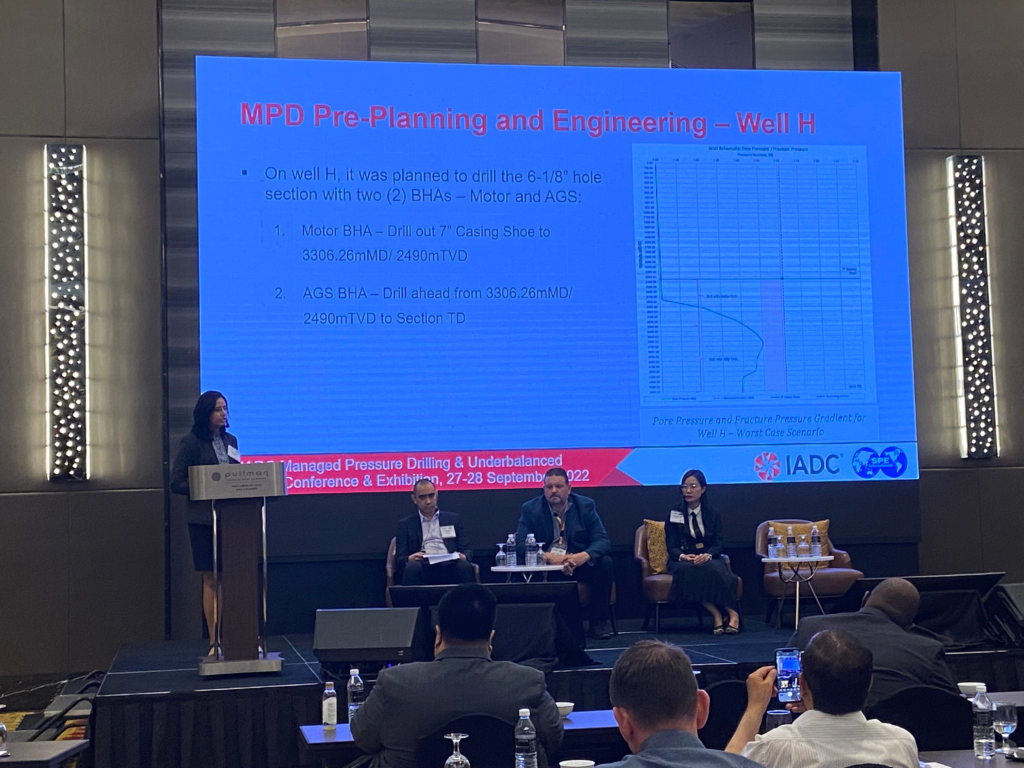
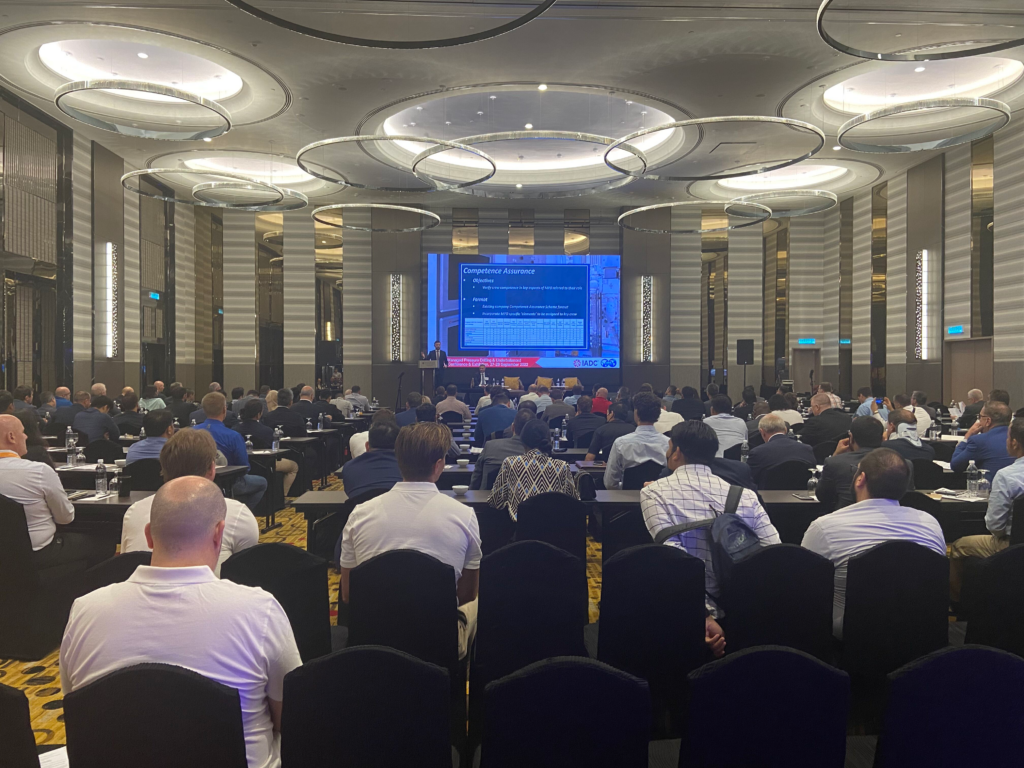
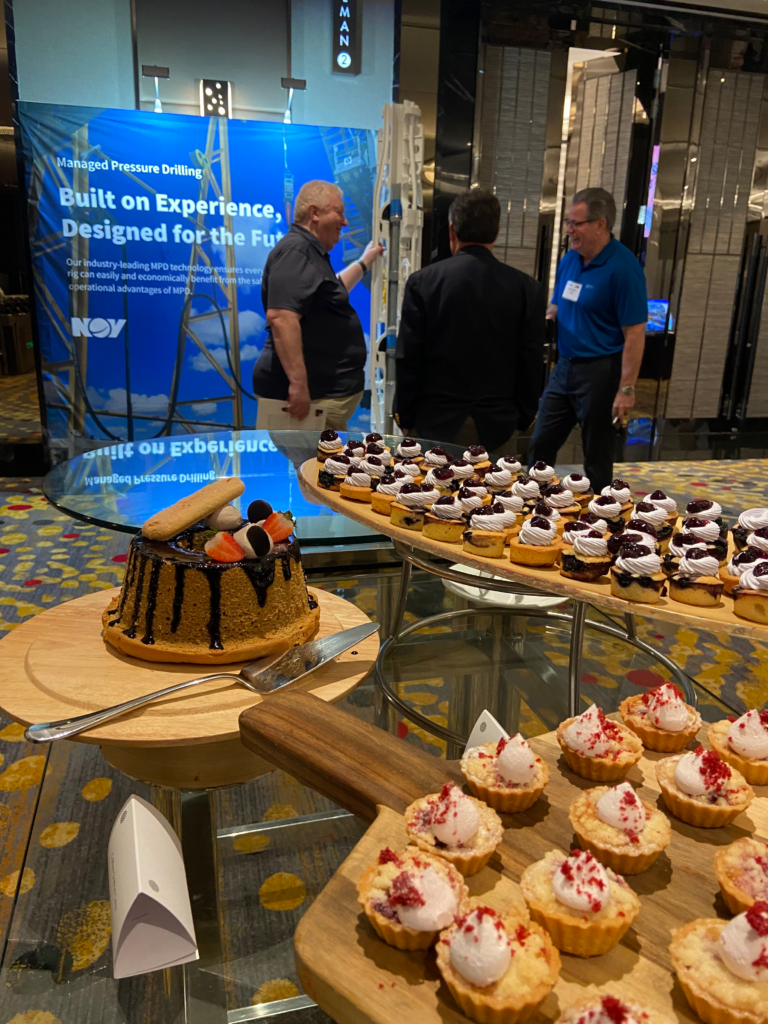
Photos From Last Event
2025 Event Demographics
Registrants by Job Title
- Company Owner/Corporate Officer
- Completion Engineer
- Drilling & Completion Engineer
- Drilling and/or Completion Operations
- Drilling Engineer
- Management
- Student
- Training/Education
Delegates
Speakers
Exhibitors
Sponsors
Registrants by Location
- Registrants
Registrants by Company Type
- Equipment Manufacturer
- Government
- Land Drilling Contractor
- Land Well Servicing Contractor
- Land/Offshore Well Servicing Contractor
- Major Oil Producer
- National Oil Company
- Offshore Drilling Contractor
- Oilfield Service/Consultant
- Training
This event is advertised in industry publications media including:

We thank you for your support!
The International Association of Drilling Contractors (IADC) is a non-profit organization. Income from this event will be invested back into other IADC initiatives we develop to serve the drilling industry to connect, share knowledge, tackle common problems and develop solutions to critical issues in different parts of the world. By participating in an IADC event you will be improving and supporting your own industry.
IADC provides web links as a member service. IADC does not warranty or endorse the accuracy or reliability of any of the information, content, or advertisements contained on websites linked to IADC.org or any of its subsidiary pages.
Venue & Hotel

Pullman London St Pancras
The room block has expired.
Address100 – 110 Euston Road, NW1 2AJ London, United Kingdom
Phone (+44)20 76669000
Negotiated Room Rate: £275.00 per room per night, including English breakfast and VAT at the current rate of 20.00%.
Cancellation Policy: The booking can be cancelled or modified up to 30 days prior to arrival date without financial penalty. After this point, full cancellation charges will apply.
Warning!
Please note that there are several 3rd party companies actively approaching conference delegates and exhibitors by phone and email trying to sell hotel rooms at the contracted hotel for a cheaper rate than the published rate on this conference website. Please note that these companies do not represent IADC or the hotel, nor has IADC or the hotel authorized them to use their names or trademarks on information they send out to exhibitors and delegates.
To avoid being a victim of fraud, please do not give out your credit card details to any other party and be sure to make your hotel reservations exclusively through the contracted hotel.
Registration Information
Press Policy
Complimentary press registration is limited to one (1) person per company. This individual must be a titled editor, writer, reporter or other bona fide editorial representative of a legitimate industry or consumer publication. Publishers and sales and marketing specialists are excluded from this complimentary registration practice and must pay the full conference registration fee to attend an event.
No unauthorized photos, videos or recording allowed.
Recording in any form (audio, video, still photography, etc.) of presentations and/or speakers during sessions, poster presentations, workshops, etc., without the express written consent of IADC and the party to be recorded is strictly prohibited. *Those who do not comply with the Recording Equipment/Photo policy may be asked to leave the premises and barred from receiving complimentary press registration for future IADC events.
Press registration must be received 1 week prior to the event to ensure entrance. Members of the press will be identified with a green press ribbon attached to their name badge.
Need Help? europe@iadc.org / + 31.24.675.2252
Conference Program
Tuesday, 15 September
07.30 Conference Registration, Coffee Service, Poster Session & Open Exhibition – Sponsored by Aquila Engineering
07.30 Speaker Briefing (Speakers, session chairs & moderators only)
08.30 Welcome, Introduction & Safety Briefing: Matt Kvalo, Chair, IADC UBO/MPD Committee; Vice President of Engineering & Technology, Stasis Drilling Solutions
08.35 Opening Presentation: Roddie Mackenzie, 2026 IADC Chairman; Executive Vice President & Chief Commercial Officer, Transocean
08.50 Keynote Presentation: Ikenna Chukwumaeze, Director, Wells Engineering Services, Chevron
9.15 UBO/MPD Committee Update
- Matt Kvalo, Chair, IADC UBO/MPD Committee; Vice President of Engineering & Technology, Stasis Drilling Solutions
09.35 Case Studies (North Sea)
Session Chair: Leiro Medina, Executive Vice President, Beyond Energy Services & Technology
Overcoming Challenges in Depleted Reservoir Drilling: Integrated MPD and Wellbore Strengthening Case Study: Thomas Coyle, Senior Drilling Engineer, Allan Brands, Yohan Vythelingum, Wael Amer, NeoNext+, Callum Rennie, Halliburton Baroid, Michael Skene, Weatherford (SPE 233712)
This session will showcase an integrated Managed Pressure Drilling (MPD) and Wellbore Strengthening case study, collaboratively developed and executed by a multidisciplinary team of service providers and operator to enable the safe and efficient delivery of a complex High Pressure High Temperature (HPHT) infill well reservoir section.
Foam Cementing with Underbalanced Mud Weight: Changing the Risk Picture and Probability of Success in the Martin Linge Field: Roberto Obando, Principal Engineer Drilling & Wells, Dag Ove Molde, Equinor, Sara Sanson, Weatherford, Frode Erstad, Haliburton (SPE 233713)
This presentation describes the first successful application of foam cementing with underbalanced mud weight in the Martin Linge field. Faced with high gas and narrow operational margins in the 8½” section, a multidisciplinary task force evaluated the feasibility of combining foam cement with managed pressure cementing. Through detailed simulations, risk assessments, and procedural development, the operation was safely executed on well A14. The success fundamentally changed the cementing strategy for the field, establishing foam cementing of the 7” liner as the preferred method for future wells. This paper presents the qualification process, key risk drivers, mitigation strategies, and operational execution that enabled the successful implementation of the first foam cementing under underbalanced conditions operation in the Martin Ling field in Norway.
10.15 Networking Break, Poster Session & Open Exhibition – Sponsored by Aquila Engineering
10.45 MPD Strategy, Performance, & Reliability
Session Chairs: Adam Keith, Product Champion – Managed Pressure Drilling, Patterson-UTI Drilling Company & Ian Barker, Senior Manager, WCE – Managed Pressure Drilling, Noble
Deepwater System Standardization Streamlines Rig Contractor Led MPD Service Delivery: Jonathan Thain, MPD Manager, Ryan Brinkley, Ademola Ajibade, Transocean, Martin Culen, Pål Jacob Nessjøen, Mary Strack, Kelda Dynamics (SPE 233730)
The presentation will provide background on historical MPD practices, implementation process, key differentiators of the selected system and demonstrated operational benefits. This initiative represents a step change in the deepwater rig contractor MPD service model, enhancing operational performance, system reliability, and the overall integration of MPD technologies across the fleet.
MPD: Not Just for Drilling: Helio Santos, President, Antonio Lage, Erdem Catak, Sandeep Valluri, Thomas Barbato, SafeKick, Neil Gooding, Seadrill (SPE 233732)
The paper will present field examples, how it has been used and the benefits of the various operations, other than drilling, being successfully carried out today when using a closed-loop MPD system:
– Confirmation of pore, collapse and frac pressures; Confirmation of salt closing pressure; Riser Gas Handling – no more riser unloading events; Confirmation if an influx is sustainable or depleting (not requiring mud weight increase); Circulating influx out without closing the BOP; Delaying BOP closure until influx is above the last casing shoe; Stripping in/out of hole faster; Running and cementing casing/liner; Placing cement plugs; Unstuck drill string; Completions; Gravel Packing; and Wireline logging.
The benefits of improved detection, faster reaction time, and complete control of the pressures applied in the wellbore allowed the successful application of MPD to the above operations, significantly reducing NPT and improving safety.
MPD Deepwater Real Data Comparison Against Different Industry Perceptions: Guilherme Vanni, Senior Advisor, André Alonso Fernandes, Gabriel da Silva Felipe, Felipe de Souza Terra, Fabio Koiti Dairiki, Ivan Mendes Sales, Petrobras (SPE 233729)
Despite MPD’s proven success in well control, narrow window optimization, and supporting completions, industry debate persists on the best SBP (Surface Back Pressure) strategy for deepwater wells with subsea BOPs. This paper analyzes data and lessons from over 150 Brazilian offshore wells using MPD SBP with varied approaches and equipment. Representing a significant share of global deepwater MPD operations, the study compares SBP strategies and operational outcomes, highlighting findings that both support and challenge current industry standards. The results provide insights into risks, impacts, and practical outcomes, advancing knowledge of deepwater MPD practices.
11.45 Exhibitor Showcase
Exhibitors will share a brief presentation of their products and services.
12.05 Luncheon, Poster Session & Open Exhibition – Sponsored by Weatherford
13.30 Panel: MPD Regulatory Frameworks in Practice: From Standards to Permitting Reality
Moderator: Guilherme Vanni, Senior Advisor, Petrobras
This session will examine how Managed Pressure Drilling (MPD) is governed in practice across different regulatory environments, moving beyond high-level standards into real-world implementation. The session will be anchored by a presentation from a Drilling Contractor, comparing how regulatory bodies approach MPD requirements and certification. This will be complemented by short perspectives from a Regulator and a Standards Organization, providing both regulatory and standards of context. While global standards provide a technical foundation, significant variability remains in how these frameworks are interpreted and enforced. In practice, MPD requirements are often implemented through a combination of formal regulations, guidance documents, and permitting processes—leading to differing compliance expectations across regions. A panel composed of regulators, classification societies, and industry bodies will then discuss:
- How MPD requirements are implemented across jurisdictions
- Differences between formal regulations, guidance, and permitting practices
- The role of certification bodies in bridging gaps between standards and enforcement
- Practical challenges in achieving regulatory acceptance
- Opportunities to improve clarity and alignment without limiting innovation
The session aims to provide a practical understanding of how MPD is accepted in real operations and how alignment across stakeholders can be improved.
- Ashish Jain, Technical Assurance Superintendent, Noble
- Roar Sognnes, Principal Engineer, Havtil – Norwegian Ocean Industry Authority
- Anton Kozlov, Advisor Drilling Engineering (Global MPD SME), Chevron
14.30 Case Studies (Deepwater MPD)
Session Chair: Guilherme Vanni, Senior Advisor, Petrobras
MPD on Salt Exit with Rubble Zone Best Practices Deep Water Gulf of America Case Study: Pier Alvarado, Project Engineer, J. C. Valecillos, S. Ramasamy, M. Vander Staak, Weatherford, E. Voorheis, J. Ramsey, Occidental Petroleum (SPE 233735)
Managed Pressure Drilling (MPD) Technology combined with Best Drilling Practices to minimize problems at Salt Exit in Deep Water Wells in the Gulf of America by mitigating scalation of events adjusting BHP when early warning signs appear or by minimizing BHP fluctuations during pump off events.
MPD Reverse Out Liner Deployment in Ultra Narrow Drilling Margins: A Case Study from the Gulf of America: Gildas Guefack, MPD Engineering Advisor, Pruitt Tool and Supply; Bonham Duncan, Nathan Tuckwell, Julio D Sosa, Shell; Sagar Nauduri, Jason Morris, Martyn Parker, Pruitt Tool and Supply (SPE 233715)
This case study describes a Gulf of America liner-running operation performed in an ultra-narrow drilling margin using a Managed Pressure Drilling reverse-out method. Tight annular clearances and limited separation between stability and fracture limits made conventional liner displacement too risky due to high bottom-hole pressure and loss potential. The operator used surface back-pressure MPD, an open-ended liner, and a diverter-assisted reverse-out of kill-weight mud. Controlled choke management maintained stable bottom-hole pressure, reduced surge effects, and prevented losses while avoiding float activation. Results showed zero losses, efficient running, and reliable zonal isolation, confirming MPD reverse circulation as a narrow-margin solution.
15.10 Networking Break, Poster Session & Open Exhibition – Sponsored by Aquila Engineering
15.40 Ensuring Rig Personnel Competency in MPD
Session Chairs: Helio Santos, President, SafeKick & Nick Ward, MPD Manager, Stena Drilling
Standardizing MPD Competence Across a Deepwater Fleet Through Simulation Based Training and Unified Procedures: Brian Clelland, MPD Performance Superintendent & Felippe Marques, MPD Performance Superintendent, Louis Snowling, Neil Gooding, Seadrill
Seadrill presents a fleetwide approach to standardizing Managed Pressure Drilling (MPD) competence through simulation based training, unified operational procedures, and strengthened field support. Case histories from deepwater rigs demonstrate improved readiness, consistent execution, and successful delivery of complex MPD modes including FMCD. The framework provides a scalable model that enhances human reliability, barrier management, and operational consistency across diverse MPD equipped assets.
Training and Competency Framework for MPD Crews: Role Based KSAs, Assessment Matrices, and Risk Based Refresher Cadence: Joseph Sardooee, Senior Drilling and Well Control Training Specialist, Ade Solarin, Mira Dagher, Ashish Jain, Noble
Managed Pressure Drilling (MPD) demands a higher level of operational discipline and crew competence to effectively manage well control barriers in complex pressure environments. This paper presents a structured Training and Competency Framework that explicitly aligns MPD crew capability with operational risk. The framework delivers a standardized, role based training model scalable across rigs and regions, reinforced by risk based refresher intervals and structured drills. Role specific Knowledge, Skills, and Abilities are defined and verified through standardized, evidence based assessments. Aligned with IADC guidance, the framework strengthens operational readiness, competency assurance, and effective barrier management in MPD operations.
Lessons Learnt from the Implementation of an MPD Competency Program for MPD Field Personnel and Engineers/Specialists: Gabriel Houng, MPD Technical Program Manager, Leiro Medina, Beyond Energy Services & Technology (SPE 233717)
An IADC-aligned MPD competency program for MPD field personnel and engineers was designed and implemented within a company operating across multiple geographical locations. The program integrates standardized MPD operating procedures and MPD Engineering processes with a digital competence management system, providing visibility of competency coverage across roles, MPD equipment configurations, and operational scopes. This structure enables adaptation to regional and technological particularities while maintaining company-wide consistency. The presentation will discuss the lessons learnt from implementing the MPD competency program, including key benefits observed, program limitations, sustainability considerations, and opportunities for future improvement.
16.45 – 17.45 Welcoming Reception, Poster Session & Open Exhibition
Wednesday, 16 September
07.30 Conference Registration, Coffee Service, Poster Session & Open Exhibition
08.30 Welcome, Introduction & Safety Briefing: Matt Kvalo, Chair, IADC UBO/MPD Committee; Vice President of Engineering & Technology, Stasis Drilling Solutions
08.35 Keynote Presentation: Mick Shutt, Well Expert Committee Member, IOGP
9.00 Middle East Focus
Session Chairs: Matt Kvalo, Vice President of Engineering & Technology, Stasis Drilling Solutions & Martin Culen, Chief Commercial Officer, Kelda Dynamics
Optimizing Well Design through MPD-Enabled Pressure Characterization: Ahmed Al Dahi, Senior MPD Technical Engineer, Carlos Iturrios Acosta, Weatherford International, Aqeel Shakhouri, Saudi Aramco D&WO (SPE 233718)
This operation marks a significant milestone in regional MPD adoption, shifting the technology’s perception from a “reactive” contingency for drilling-hazard mitigation to a “proactive” tool for well-design optimization. It provides a technical framework for future well planning, demonstrating that accurate pressure characterization can lead to significant structural simplifications and cost savings.
UBD Technique Overcomes Geological Uncertainties, Leading to A Production Improvement of 10 Times While Saving 3 Days Rig Time: Muhammad Moawwaz UlHaque, MPD Engineering Manager-MENA, Weatherford International, Ivan Sergeykin, Weatherford Saudi Arabia (SPE 233719)
As a result of drilling underbalance, the production rate was 1113bbls/day compared to 88bbls/day for a conventionally drilled well. Successful implementation of UBD drilling allowed the operator to reach planned TD while mitigating wellbore stability issues, avoiding losses & thereby use of LCM pills, saving a bit trip leading to 3 days saved rig time. Additionally, data acquired during UBD operations allowed the operator to optimize & enhance the gas lift design of the well leading to a production improvement in excess of 10 times.
Drilling the Undrillable Window: Proving MPD Feasibility in a Narrow-Margin Offshore Carbonate Field: Thiago Pinheiro da Silva, Technology Advisor and Project Manager, Blade Energy Partners
This paper presents the feasibility of applying Managed Pressure Drilling (MPD) to narrow-margin offshore carbonate and extended-reach wells. The study integrates pressure-window definition, hydraulics modeling, swab and surge analysis, and operational planning for drilling, tripping, liner deployment, and completion. The results demonstrate that a statically underbalanced fluid combined with dynamic surface backpressure can maintain wellbore pressure within the operating window, enabling a simplified one-mud-weight strategy and reducing operational risk throughout well construction.
10.00 Networking Break, Poster Session & Open Exhibition
10.30 MPD Systems: From Digital Innovation to Proven Performance & Reliability
Session Chair: Jonathan Thain, MPD Manager, Transocean
A Method for Field Calibration of MPD Simulators and Pre-deployment Testing of Performance and Stability in Choke Control Systems: Tarek El-Algroudi, Control System Specialist, Glenn-Ole Kaasa, Kelda Dynamics, Jonathan Thain, Transocean (SPE 233720)
This presentation introduces a field-validated testing methodology for MPD choke control systems, addressing the critical need for rigorous performance evaluation and concrete stability verification. Historically, dynamic stability is rarely evaluated prior to deployment because standard environments lack field-validated acoustic dynamics. Built upon a high-fidelity model calibrated against offshore data, this framework accurately simulates complex wellbore transients and resonances. By subjecting control software to rigorous operational scenarios, the methodology generates standardized metrics for tracking accuracy, disturbance rejection, actuator wear, and robust stability margins. This enables operators to objectively verify software performance and safety while reducing costly rig-based tuning.
Enhancing MPD Performance Through BOP Reliability Engineering and Real-Time Condition Monitoring: Jose Meraz, President, Adams Braly, Amine Meziou, Eric Fritts, Aquila Engineering (SPE 233737)
Managed Pressure Drilling (MPD) operations involve significant economic exposure, where non-productive time events and equipment-related disruptions can escalate rapidly. While MPD performance is often viewed through the lens of control systems and hydraulics, reliability limitations within critical barrier equipment — particularly the Blowout Preventer (BOP) — frequently play a decisive role. This presentation explores how reliability-centered strategies, including failure tracking, structured observations, fault tree analysis, and real-time dashboards with analytics, can enhance MPD reliability and reduce downtime risk. Practical implementation concepts are discussed to illustrate how real-time condition monitoring and reliability engineering methods may improve predictability, support early anomaly recognition, and strengthen operational confidence in high-consequence drilling environments.
Automation Without Isolation: Preserving Human Performance in Remote Drilling Operations: Matt Kvalo, Vice President of Engineering & Technology, Sergio Cedano, Antonio Torrealba, Martin Duarte, Edward Laird, Stasis Drilling Solutions (SPE 233733)
This presentation examines how Remote Support, Remote Monitoring, and Remote Operation models are applied in modern drilling and MPD operations, emphasizing the role of human factors in their success. It shows how cognitive workload, situational awareness, and decision-making shape performance as automation and distance increase. The discussion highlights the need to balance efficiency with adaptability through thoughtful system design, clear roles, and human-centered operational frameworks.
Integrated Managed Pressure Drilling Within Rig Operating System: Clarke Brockman, MPD Engineering Manager, Dianne Nguyen-Binz, Nabors, Mary Strack, Kelda Dynamics (SPE 233734)
This presentation will discuss the efficiencies gained and methods used for automating managed pressure drilling (MPD) inside of the rig operating system. The methods and sequences for various levels of MPD and the safety of operations will be covered.
11.50 Luncheon, Poster Session & Open Exhibition
13.20 An Integrated View of MPD Performance: Hardware Reliability, Transient Modeling, and Real-Time Measurement Innovations
Session Chairs: Billy Walker, Senior Director, MPD Sales, NOV Rig Technologies & Martyn Parker, Vice President MPD Services, Pruitt Tool and Supply
Evaluating Integrated Riser Joint Technology: Ivan Sales, MPD SME, André Fernandes, Guilherme Vanni, Gustavo Pena, Fabio Dairiki, Petrobras (SPE 233738)
Managed Pressure Drilling (MPD) has been extensively applied on floating rigs for the past 15 years. One of the key components that allows the application of MPD in deepwater scenarios is the Integrated Riser Joint (IRJ). This paper presents an evaluation of integrated riser joints performance regarding installation times, reliability and failures, focusing on their impact on time and cost. In addition, it proposes solutions for improvement of equipment reliability, reducing NPT, and enhancing overall MPD performance in floating drilling operations.
Closing the Loop: A Novel Autonomous In-Line Rheometer for Real-Time ECD Management: Mauricio Santos, Senior Modelling Engineer, Helio Santos, Jason Hannam, Marlon Moura, SafeKick, Russell Stewer, Alec Spedding, Seadrill (SPE 233721)
This paper presents a new autonomous rheometer system designed to eliminate human factors, ensuring the ECD is managed by objective, high-frequency machine-generated data rather than periodic manual inputs. Rather than just providing rheology data, the system is integrated with the hydraulic model ensuring improved accuracy in downhole pressure calculations. The system utilizes a compact rheometer unit installed on the process flow line, with an autonomous pumping system, allowing for precise shear rate control and on-demand gel strength measurements. The system is programmed to operate on a continuous and automated cycle, applying temperature compensation and signal conditioning to generate a rheogram every 5 minutes, which is sent directly to the hydraulic model. The paper presents the results obtained in the laboratory and testing set-up, confirming the sensor’s accuracy against standard rotational viscometer measurements. The paper also presents the results from a field installation on a deepwater drillship.
Enhanced Early Kick Detection with MPD Applications: A New Interpretation Model and Sensor System for Precise Kick and Loss Detection Beyond Current Technology Limitations: Andrea Manzoni, R&D Engineer, Alberto Martocchia, Charaf El Jaad, Marcel Dias Antunes, Isaac Easow, Geolog (SPE 233740)
This presentation introduces a field-validated, next-generation flow measurement system developed to enhance early kick and loss detection in Managed Pressure Drilling (MPD) operations. The system integrates a high-pressure Flow In sensor installed at the standpipe with a compact hybrid Flow Out meter positioned downstream of the MPD choke, enabling accurate real-time delta-flow monitoring across the well. Designed to operate under pressures up to 10,000 psi and background gas concentrations exceeding 40% as well as strong mud inhomogeneities, the system incorporates a novel workflow that distinguishes gas expansion effects from true downhole gain or loss events, improving both the accuracy and responsiveness, thereby enhancing operational safety and efficiency, and supporting more reliable identification of fractured zones.
Transient Verification of Mud Gas Separator Capacity During Influx Circulation Using Coupled Multiphase Hydraulics and MPD Surface Backpressure Modeling: Pedro Cavalcanti de Sousa, Technology Development Engineer, Thiago Silva, Oscar Gabaldon, Blade Energy Partners (SPE 233739)
The study develops a transient workflow to assess MGS performance under realistic multiphase influx conditions, addressing limitations of steady state capacity ratings. It couples transient wellbore circulation modeling with mechanistic MGS capacity criteria to evaluate time dependent gas/liquid rates, pressure, temperature, and gas fraction throughout circulation. A simulation matrix examines the effects of SBP, pump rate, and gas solubility, showing tradeoffs between gas rate reduction and separation efficiency. The workflow enables SBP–pump rate operational envelopes that identify safe and exceedance regions, defining an optimal operational window for MPD applications.
14.40 Networking Break, Poster Session & Open Exhibition
15.10 The Future of Well Control: Where AI, Machine Learning, and Real-Time Intelligence Meet
Session Chair: Greg Myers, Director – BOP and Drilling Technology, HMH
Subsurface Gas Expansion Analysis and Enhanced IME Visualization with Isobaric and Isovolumetric Lines: Icaro Ostan, R&D Engineer, Martin Culen, Geir Arne Evjen, Kelda Dynamics (SPE 233741)
This work introduces the use of constant downhole pressure curves within the influx management envelope to clarify which operating regions remain reachable after an influx. By redefining envelope boundaries and introducing pressure and volume margins, the method corrects common misinterpretations of operational regions. A relationship between pressure margins with the commonly known kick tolerance metric is also presented, as well as projected surface pressure and volume for an influx. The approach improves situational awareness and supports more reliable decision making during drilling operations.
Early Kick Detection Without Trade-Offs High Sensitivity Without False Alarms: Antonio Balanza, MPD Product Champion, Aldana Martinez, Andrew McLennan, Cody Butler, Halliburton (SPE 233722)
Early kick detection plays a critical role in Managed Pressure Drilling by linking continuous well monitoring with timely influx response. Despite advances in MPD technology, current detection systems rely on fixed sensitivity settings that force a tradeoff between early detection and false alarms, particularly during operational transitions. This presentation introduces an adaptive early kick detection approach that continuously adjusts to real-time operating conditions, isolating true well behavior from operational effects. By removing the sensitivity tradeoff, the approach improves detection reliability, increases confidence in influx management, and enables higher levels of automation in MPD operations.
Field Deployment of an Auto-Calibrated Virtual Trip Tank: Santiago Callerio, Graduate Research Assistant, Noah Kanter, Karim Al Kharsa, Pradeep Ashok, Eric van Oort, The University of Texas at Austin, Matt Kvalo, Stasis Drilling Solutions (SPE 233723)
This presentation highlights the full-scale field deployment of a Virtual Trip Tank auto-calibration system integrated with real-time AI-based kick/loss detection. Attendees will see how delta-flow accuracy was improved, drift minimized, and event detection strengthened under live MPD conditions—demonstrating a practical, low computational cost solution that enhances dynamic well control and accelerates digital technology and AI adoption at the rig site.
16.10 MPD in Unconventional Plays
Session Chair: Oscar Gabaldon, Drilling Technologies Development Manager, Blade Energy Partners
Integrated Managed Pressure Drilling in Vaca Muerta: Enabling Simultaneous Operations and Enhanced Efficiency in Pad Drilling: Lucas Mandziuk, MPD Leader & Ezequiel Casado, MPD Engineer, Nabors (SPE 233728)
This paper describes the field application of an integrated Managed Pressure Drilling (MPD) workflow in Vaca Muerta, Argentina, focused on reducing repeated rig critical-path exposure during multi-well pad operations while maintaining pressure-management capability across drilling and post-drilling activities. The workflow integrates MPD surface equipment, return paths, pressure control, monitoring, and operating interfaces into the rig configuration, enabling readiness, validation, and selected transition tasks to be performed offline or in parallel with other rig activities. Field records from multi-well pads show that the first well carries the main MPD rig-up and validation exposure, while subsequent walking transitions increasingly shift MPD-related work away from the active critical path. The integrated workflow also supports dynamic pressure-management decisions during drilling, connections, tripping, displacement, well balancing strategy selection, and Offline Managed Pressure Cementing. The results demonstrate that integrated MPD improves pad efficiency not by eliminating MPD-related work, but by safely relocating repeatable preparation, verification, and transition activities outside the critical path where possible.
Challenging the Well Control Procedure Through the MPD Manifold Beyond Typical MPD Matrix Limits: Carlos Enrique Sanguinetti, DPM WH PSD Manager, Ahmed Rami Abuelaish, Freddy Rojas, SLB (SPE 233724)
A practice of continuing well control through the MPD manifold, with the BOP closed to isolate the RCD, is increasing in popularity as operators push beyond MPD limits. Despite growing demand, it remains insufficiently defined in industry-recommended practices, leaving uncertainties in operational considerations. This paper documents current practice and provides recommendations to improve procedural clarity and risk management, while challenging the perceived benefits of extending MPD beyond traditional limits.
Transitioning from Managed Pressure Drilling to Managed Pressure Wells: A Holistic Well Construction Philosophy in the Mexico Region: Sherif Emam, Global Engineering Manager – MPD, Carlos Cervantes, Filiberto Reguero, Weatherford (SPE 233731)
The presentation includes operational examples and statistical data for each MPW application described, highlighting measurable performance across 106 wells in Mexico between 2020-2025. Real case studies demonstrate quantifiable benefits, including documented savings of up to 25 days and USD 1.8 million in an HPHT well in the Gulf of Mexico through optimized pressure testing and section elimination. Additional examples show how MPC reduced mud losses and ensured cement integrity, while reverse-circulation MPC minimized reaming time. Results also include improved well integrity, reduced non-productive time, and enhanced safety through early kick detection and accurate ballooning identification, demonstrating the tangible economic and operational value of MPW.
17.10 Closing & Adjournment
Poster Session & Unassigned Papers of Note:
The following paper proposals are presented as posters and will be included in the conference if a scheduled paper becomes unavailable. In addition, these presentations will be made available in the IADC conference proceedings, should the author so desire.
Practical Technology Simplification for Offshore MPD: Reducing Complexity While Improving Safety and Reliability: Shawn McClosky, Product Line Manager – MPD, NOV, Linden Duong, Ian Barker, Noble
This presentation examines how evolving offshore MPD applications drive OEM technology toward a balance of advancement and simplicity. It highlights two proven, low complexity solutions: the MPD HFGN for rapid, remote flowline connection/disconnection and an in situ replaceable stripping sleeve that protects the DSIT annular element to reduce wear, premature damage, and changeout downtime. Using field data from rig examples with and without these products, the presentation aims to quantify efficiency gains and reviews safety improvements based on drilling contractor input. It also discusses active vs. passive Deepwater RCD IRJ package options.
Executing PMCD with Downhole Deployment Valve (DDV) with Annulus Access in Shallow Water Wells: Magdeline Mathew, Wells Supervisor, Joachim Wan, Razif Mohd-Radzi, Sarawak Shell Berhad (SPE 233743)
Incorporation of DDV with annulus access as a reliable enabler for high angle carbonate development wells with risk of total losses. This technology reduces well control exposure and risks of stuck pipe, inadequate wellbore clean-up, and potential productivity impairment. A showcase of successful field implementation in offshore Malaysia, design evolution, and identification of candidate wells where the technology delivers maximum value in delivering safer operations and more predictable campaign outcome.
Deepwater Drillship with World’s Most Capable CML System Reducing Well Cost: Nick Ward, MPD Manager, John Mitchell, Stuart Wyse, Stena Drilling, Dave Smith, Rudy Flores, Enhanced Drilling
This presentation covers work by a drilling contractor and service company to develop an innovative installation of the world’s most powerful Controlled Mud Level (CML) system on a 7th Generation Deepwater Drillship. Providing a number of world firsts, it will outline the technical advances made on previous CML systems and identify exactly how this increased capability is delivering well construction benefits for the industry. It will also explain how the worlds first integrated CML rig contract increases access to this technology for global operators.
New Data-Driven KPIs for MPD: Jennifer Market, Chief Scientist, Lars Oy, Well ID, Michael Shaver, Siddhartha Lumkad, Var Energi
Managed Pressure Drilling (MPD) aims to maintain bottomhole pressure within a narrow pressure window, but traditional KPIs—based on 1 Hz data and focused mainly on connections—may overlook significant transient fluctuations. High-frequency (100 kHz) measurements from North Sea wells reveal frequent short-duration pressure excursions linked to drilling dynamics. Although brief, these events can cause cumulative formation fatigue affecting drilling, completion, and production. Revised KPIs—tracking time, percentage, and frequency of excursions outside limits—combined with improved visualization, enable more effective MPD optimization and better overall well performance.
Optimizing MPD Surface Manifold Isolation Using a Stemless Gate Valve with Integrated Double Block-and-Bleed Functionality: Reese Jones, Vice President of Business Development, Roger Lovslett, Kinetic Pressure Control (SPE 233726)
This presentation discusses an optimized isolation concept for Managed Pressure Drilling (MPD) surface manifolds using a stemless gate valve (SGV) with integrated double block and bleed (DBB) functionality. The approach leverages a DBB SGV design that has been extensively deployed and validated in high cycle well fracturing applications and adapts it for surface backpressure MPD operations. The presentation explains the DBB design fundamentals, isolation verification method, and redundancy, and evaluates benefits for MPD including reduced valve count, fewer leak paths, smaller footprint, and improved safety through clear, verifiable isolation during routine operations and flow path reconfiguration.
Conference Program Committee
- Adam Keith, Patterson-UTI Drilling Company
- Ali Yousefi Sadat, Opla Energy
- André Fernandes, Petrobras
- Aqeel Shakhouri, Saudi Aramco
- Billy Walker, NOV
- Greg Myers, HMH
- Guilherme Vanni, Petrobras
- Hari Hariharan, Shell
- Helio Santos, SafeKick
- Ian Barker, Noble
- Inam Haq, bp
- Jon Thain, Transocean
- Leiro Medina, Beyond Energy Services & Technology
- Martin Culen, Kelda Dynamics
- Martyn Parker, Pruitt Tool and Supply
- Matt Kvalo, Stasis Drilling Solutions
- Nick Ward, Stena Drilling
- Oscar Gabaldon, Blade Energy Partners
- Rudy Flores, Enhanced Drilling
- Tamela Claborn, SPE
- Leesa Teel, IADC
Exhibition Information
COST FOR THE 3 X 2 METER SPACE + 2 COMPLIMENTARY REGISTRATIONS IS EUR 2250,-.
The space will be set with a skirted table, two chairs and access to electricity. With the space, you receive 2 complimentary conference registrations and up to 2 additional registrations at half price (EUR 375).
Exhibitions at IADC events will be limited to showcasing products and services that advance technology, competency or HSE. Exhibitions centered on recruitment or employment should not take space at IADC events. IADC Exhibitions will solely be visited by conference attendees. Non-conference attendees are not allowed to enter the exhibition area.
Please note that IADC Global Membership is required for booking an exhibition space at an IADC event (Chapter membership not eligible for exhibition).
For more information and exhibition bookings please contact us at europe@iadc.org or phone: +31.24.675.2252.
Reservations can be made by completing the letter of agreement and returning it by e-mail: europe@iadc.org.
Exhibition space is being allocated on a first come, first served basis!

Sponsorship Information
There are five levels of sponsoring: Diamond sponsors, Platinum Sponsors, Gold Sponsors, and Silver Sponsors. Event sponsorships are also available and will be categorized by monetary contribution with the appropriate level of sponsorship. Please find the benefits of the sponsor packages below. The conference sponsor will receive high profile recognition before, during and after the conference. IADC membership required to be eligible.
Diamond
€25.000
(10 Comps*)
Platinum
€15.000
(5 Comps*)
Gold
€12.000
(3 Comps*)
Silver
€7.500
(2 Comps*)
Event
Reception €10.000
(3 Comps*)
Event
Luncheon €8.000
(2 Comps*)
Event
Conference App €4.000
(1 Comp*)
Event
Coffee Breaks €5.000
(1 Comp*)
*Comps refer to number of complimentary registrations.
Note: no refunds for cancellations of sponsorships will be issued.
For more information and sponsor bookings please contact us at europe@iadc.org or phone: +31.24.675.2252
Platinum Sponsors
Gold Sponsors

Silver Sponsors
Event Sponsors

Become a Sponsor
Learn more about IADC Conference sponsorship.
